LEO-to-Cell, AI Policy Shifts, and ESG: What CIOs Need
SpaceX’s satellite-to-cell push, shifting AI content rules, and scrutiny of data-center water use are converging. Smart leaders turn these into resilience plays.
Executive Summary
SpaceX is advancing satellite-to-cell capabilities, positioning LEO as a seamless extension of terrestrial networks. Concurrently, scrutiny of data-center water footprints is intensifying, and AI model providers continue to revise content policies. These shifts demand resilient networks, transparent ESG practices, and agile AI governance. Leaders should act within 90 days to pilot LEO failover, audit water impacts, and operationalize a policy-tracking model for AI.
- ▸LEO-to-cell is moving from novelty to practical resilience layer.
- ▸Scrutiny of data-center water use is intensifying; prepare to disclose more.
- ▸AI vendor policy changes require continuous monitoring and layered controls.
- ▸Shift network metrics from cost-per-bit to resilience-per-workload.
- ▸Adopt skills-first hiring to tap non-traditional talent pipelines.
Why this matters now
Three signals are converging for enterprise technology leaders: SpaceX’s push into telecom-grade connectivity via low-Earth-orbit (LEO) satellites, updates to AI content policies by leading model providers, and evidence that data-center water footprints may be higher than reported. Each trend by itself is material; together, they reshape how CIOs and COOs think about network resilience, AI governance, and ESG accountability. The common thread is operational optionality—building systems that remain performant under regulatory, market, or environmental stress.
SpaceX’s LEO-to-cell ambition reshapes connectivity
SpaceX’s Starlink has shifted from a consumer broadband story to a broader telecom narrative, including direct-to-cell capabilities through partnerships with mobile operators. The strategic intent is clear: make satellites an extension of terrestrial networks, not a separate last resort. For enterprises, that unlocks:
- True-path redundancy: LEO links can provide failover for critical sites, mobile workforces, maritime/aviation operations, and remote industrial assets without the latency penalty of traditional geostationary services.
- Ubiquitous IoT backhaul: Low-power devices in logistics, energy, and agriculture can maintain intermittent or continuous connectivity outside fiber footprints, improving data timeliness and asset visibility.
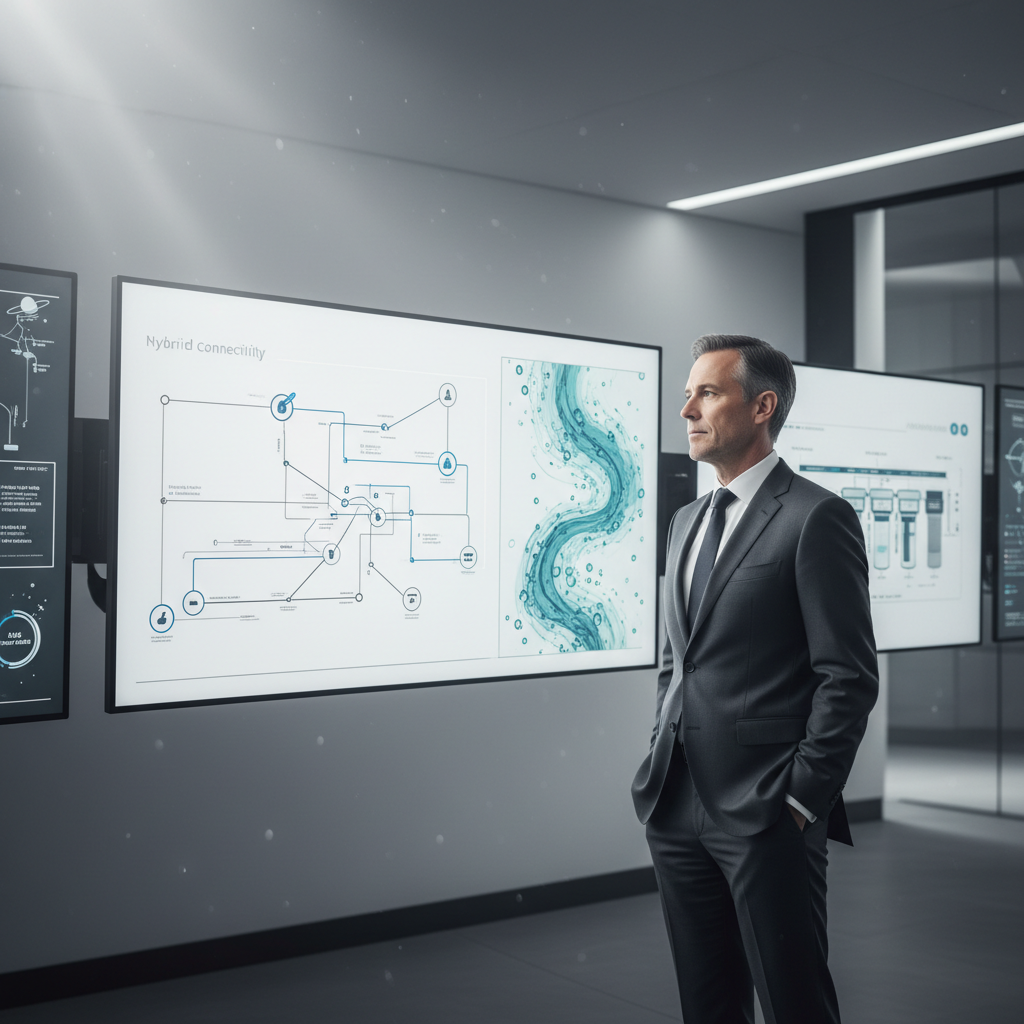
- Edge continuity: As edge workloads scale, a hybrid mesh—fiber, 5G, private LTE, and LEO—reduces single points of failure for real-time applications.
What to watch: spectrum and device ecosystem maturation; regulatory approvals for satellite-direct-to-cell services; integration with carrier billing, eSIM management, and enterprise SD-WAN/SASE stacks. Expect pricing models to evolve beyond simple bandwidth into SLAs aligned with mission criticality and location.
Action for CIOs: run a controlled proof-of-concept at one high-risk site or mobile fleet segment. Integrate LEO failover into SD-WAN with automated policy-based routing. Validate security posture (encryption end-to-end, identity at the edge), and stress-test application performance under failover scenarios. Procurement should negotiate portability in carrier contracts to avoid lock-in as satellite-cell ecosystems evolve.
ESG reality check: data-center water use under the microscope
Fresh analysis and investigative reporting suggest data-center water consumption may be understated in some disclosures, especially where indirect water (used in power generation) and climate variability are insufficiently accounted for. With AI workloads driving higher-power footprints, cooling strategies are a board-level risk, not just a facilities concern.
Implications:
- Location strategy: water stress must be modeled alongside grid reliability, latency to users, and tax incentives. In some regions, sustainable cooling may hinge on alternative technologies or water reuse agreements.
- Design and operations: warm-liquid cooling, heat recapture, and AI-driven thermal optimization can reduce water intensity; however, they require coordinated planning with vendors and utilities.
- Disclosure and trust: stakeholders increasingly expect transparent accounting of both direct and embedded water use. Align reporting with recognized frameworks and ensure third-party verification where feasible.
Action for COOs and CTOs: commission a joint audit with cloud and colocation partners to reconcile reported versus actual water impacts across workloads. Prioritize workload placement policies that account for seasonal water constraints. Write performance-based clauses into contracts for water and energy efficiency, with clear measurement methods.
AI policy signals: end of a notable content ban
Reports indicate a leading AI provider has ended a prior restriction (“Fable” ban), underscoring how rapidly model policies evolve. For enterprises, the takeaway isn’t the specific policy detail; it’s that vendor guardrails can change faster than your internal governance.
Implications:
- Governance agility: policy updates must be tracked in real time across all AI vendors. Establish a routine for impact assessments, retraining, and prompt/library updates when guardrails shift.
- Content risk controls: implement layered controls—pre- and post-generation filters, content classifiers, and human-in-the-loop escalation—for sensitive domains. Don’t rely solely on a vendor’s default safety profile.
- Contractual clarity: ensure agreements define notification windows for policy changes, audit rights, and remediation paths if updates affect compliance or brand risk.
Talent pipeline shifts: alternative schooling gains traction
High-earning families exploring alternative schooling models signals a broader trend: non-traditional credentials are increasingly mainstream. Enterprises should assume greater diversity in educational pathways for the next wave of talent.
Implications:
- Skills-first hiring: emphasize demonstrable capabilities over pedigree. Calibrate assessments and on-ramps (apprenticeships, nano-credentials) to capture high-potential candidates from varied backgrounds.
- Learning ecosystems: strengthen partnerships with bootcamps, community colleges, and online programs; align curricula to your tech stack and compliance needs. Internal academies can accelerate time-to-productivity.
A 90-day leadership agenda
- Network resilience: pilot LEO failover in one critical operation; integrate with SD-WAN and run monthly cutover drills.
- ESG realism: conduct a water-use reconciliation with cloud/colo providers; define policy for workload placement that accounts for water and energy seasonality.
- AI governance: implement a vendor policy tracker; formalize content risk tiers with corresponding technical controls; update contracts for notification and audit provisions.
- Talent pipeline: launch a skills-first pilot in one function; partner with two alternate education providers to co-design job-ready curricula.
The bottom line
The winners will treat LEO connectivity, AI policy agility, and ESG rigor as a single operating system for resilience. Build optionality into networks, governance into AI, and transparency into infrastructure. The payoff is fewer disruptions, faster recovery, and greater strategic freedom as markets and regulations shift.
Executive Perspective
I view SpaceX’s telecom trajectory as an enterprise wake-up call: connectivity is becoming a programmable utility spanning fiber, 5G, private wireless, and LEO. The practical upside is not novelty; it’s operational continuity when land-based networks fail or workloads push closer to the edge.
On AI and ESG, the leadership mandate is similar—govern what you don’t control. Vendor policy shifts and water disclosures will keep evolving. Establish instrumentation, contractual clarity, and decision rights that let you adapt quickly without pausing innovation. Optionality is the new uptime.
What This Means for Organizations
Expect structural changes in network architecture teams as LEO links move from experimental to tiered business continuity. Network, security, and procurement must coordinate on SD-WAN policies, identity at the edge, and carrier contracts that anticipate satellite-cell integration.
Facilities, sustainability, and cloud platform teams will need a shared scorecard that ties workload placement to water and energy impacts. Legal and risk should embed AI policy monitoring into third-party risk management so model updates trigger predefined controls, not ad hoc firefighting.
Strategic Impact
Enterprise decision-making should shift from cost-per-bit to resilience-per-workload. Leaders will favor hybrid connectivity and data-center partners that can document resource impacts and adapt cooling strategies as AI demand grows.
In AI, strategy should emphasize layered controls and vendor diversity, balancing innovation velocity with consistent guardrails. This reduces vendor lock-in and mitigates compliance drift as model providers adjust policies.
Operational Implications
Run monthly failover tests that include LEO links, measure application-level SLAs under cutover, and log security telemetry across all transport paths. Expand SD-WAN policy definitions to include environmental thresholds and regional network health signals.
Adopt water-aware workload placement. Require cloud/colo partners to provide transparent reporting on direct and embedded water factors. Establish a change-management playbook for AI policy updates that includes content filter tuning, prompt library updates, and stakeholder communications.
Future Outlook
LEO-to-cell services are likely to mature into standard enterprise options embedded in carrier and SD-WAN catalogs, with clearer SLAs and device ecosystems. As coverage and integration improve, expect wider use in logistics, energy, and public sector continuity planning.
AI infrastructure growth will keep pressure on water and energy systems, accelerating adoption of alternative cooling and more granular ESG disclosures. Vendors will iterate safety policies; enterprises with modular governance and multi-vendor strategies will move faster with less risk.
- • Renegotiate carrier contracts to anticipate satellite-cell integration and SLA tiers.
- • Prioritize data-center partners that can evidence water and energy efficiency.
- • Diversify AI vendors and codify contractual notifications for policy shifts
- • Invest in internal academies and external partnerships for skills-first hiring
- • Implement a vendor policy tracker and automated alerts for model updates.
- • Deploy pre/post-generation filters and human review for sensitive content.
- • Adopt multi-model routing to balance safety profiles and performance.
- • Align AI governance with third-party risk management and auditability
This analysis was inspired by reporting from SpaceX’s Telecom Dreams. All analysis, commentary, and strategic perspective is original work by Geraldine Vilato.